10 Things Every Family Should Search For in Senior Care Memory Support
Business Name: BeeHive Homes of Clovis
Address: 2305 N Norris St, Clovis, NM 88101
Phone: (505) 591-7025
BeeHive Homes of Clovis
Beehive Homes of Clovis assisted living care is ideal for those who value their independence but require help with some of the activities of daily living. Residents enjoy 24-hour support, private bedrooms with baths, medication monitoring, home-cooked meals, housekeeping and laundry services, social activities and outings, and daily physical and mental exercise opportunities. Beehive Homes memory care services accommodates the growing number of seniors affected by memory loss and dementia. Beehive Homes offers respite (short-term) care for your loved one should the need arise. Whether help is needed after a surgery or illness, for vacation coverage, or just a break from the routine, respite care provides you peace of mind for any length of stay.
2305 N Norris St, Clovis, NM 88101
Business Hours
Choosing memory support for a parent or spouse is hardly ever a neat, scientific decision. It typically starts with a missed out on drug, an oven left on, a discussion that circles back to the same inquiry 3 times, or a late-night call that leaves every person trembled. Families typically begin by looking for memory care near me or senior living near me, intending to discover a location that really feels risk-free without feeling institutional. That very first search is just the start. What matters following is recognizing just how to judge the quality of the care, the culture of the neighborhood, and the everyday fact your loved one will really live with.
Memory support is not nearly guidance. Good senior care for someone living with dementia or an additional memory-related condition needs to protect dignity, reduced stress and anxiety, support routines, and adjust as demands change. The very best neighborhoods recognize that memory loss influences greater than recall. It transforms just how a person refines sound, transitions, strange faces, appetite, thirst, and even the texture of a hallway at the end of the mid-day. The details matter greater than most households realize.
Over the years, one pattern appears over and over. Households commonly focus initially on the large noticeable things, like whether the structure is clean or whether the price appears reasonable. Those are necessary, yet they are inadequate. A refined lobby tells you really little about exactly how a resident will certainly be greeted when they awaken puzzled at 2 a.m. Or whether team will certainly know exactly how to relax an afraid person without escalating the minute. The real difference between adequate care and strong memory care usually resides in the smaller decisions.
A safe setting that still feels human
Safety is non-negotiable, yet safety alone is not the goal. A memory care area need to lower obvious dangers without making locals really feel entraped or managed like freight. That balance is tougher to solve than it looks.
Look closely at the physical atmosphere. Are sidewalks simple to follow? Is lights even and soft, not severe or shadowy? Exist apparent journey dangers, clutter, or confusing stumbling blocks? An individual with dementia can end up being dizzy in places that appear common to the remainder of us, so style choices lug genuine weight. I have actually seen families take a breath easier when they notice protected exits, encased yards, and clear sight lines that allow team notice straying without floating over every step.
At the exact same time, prevent areas that really feel extremely secured down or removed of heat. Good memory assistance protects homeowners, yet it also gives them reasons to keep moving, looking, and involving. A garden course, an acquainted chair by the home window, and places to stop briefly can soothe the nerves in ways that signage and alarm systems cannot.
Staff that recognize just how to react, not just how to supervise
If there is one area that divides solid elder care from typical care, it is personnel training. Memory loss adjustments communication, and personnel need more than perseverance. They require judgment. They need to understand just how to redirect without arguing, just how to review habits as interaction, and exactly how to detect the difference between confusion, discomfort, hunger, medicine side effects, and a straightforward demand for reassurance.
When you visit, pay attention to how team speak to homeowners. Do they stoop or sit to satisfy someone at eye degree? Do they make use of tranquil, respectful tones? Do they hurry via a response, or take a minute to orient the individual without embarrassing them? These details are not aesthetic. They tell you whether the team comprehends memory care or merely gives custody.
Ask concerning turn over, also. High turnover frequently leads to inconsistent routines, and regimens matter tremendously for people with cognitive decline. An acquainted face can defuse a hard early morning faster than any type of treatment. If an area appears polished externally however the staff can not appear to answer fundamental concerns about their experience, that is worth taking seriously.
Personalized routines rather than one-size-fits-all schedules
No 2 residents move via amnesia in specifically similarly. Some are most alert in the morning. Others settle right into themselves later in the day. Some require regular reassurance. Others do much better with silent framework and marginal fuss. Great memory support includes these differences.
A solid area ought to be able to clarify just how they learn each resident's behaviors, preferences, sets off, and conveniences. That consists of average points like whether a person likes coffee before morning meal or likes to snooze after lunch, but it also consists of much deeper patterns. Maybe your mother ends up being perturbed when there is excessive sound during drug rounds. Maybe your father resists bathing after dinner but approves it earlier in the day. These are the sort of information that can transform everyday life.
Ask how frequently care strategies are upgraded. Amnesia is not static. A person that can still participate in team activities this month may need a lot more individually support in 3 months. A thoughtful memory care program expect those modifications as opposed to waiting on a crisis.
Meals that sustain appetite, dignity, and routine
Food is just one of the most forgotten measures of top quality in senior living, and it is specifically important in memory care. Cravings can alter with dementia. So can the capacity to make use of tools, remain seated through a dish, or remember that food is readily available. A resident that misses out on dishes may not tell you they are memory care clovis nm starving. They might simply become a lot more perturbed, a lot more exhausted, or even more withdrawn.
When you tour a neighborhood, ask to see a dish setting if possible. Notification whether the eating area really feels calm or chaotic. Are recipes and table setups very easy to identify? Do team deal gentle cueing? Are there flexible choices for people who consume much better at various times of day? Also the shape and shade of plates can matter greater than individuals believe, since visual comparison assists locals determine food a lot more easily.
Also take notice of how the kitchen area fits altering needs. Some locals do better with finger foods. Others need softer textures or additional inspiration to consume water. Great neighborhoods pay attention to hydration, not just calories, since dehydration can promptly make confusion and anxiety even worse. Family members frequently do not understand how much the dining experience affects the whole rhythm of the day till they see it handled well.
Activities that are significant, not simply busy
A dynamic calendar behaves. Meaningful interaction is better.
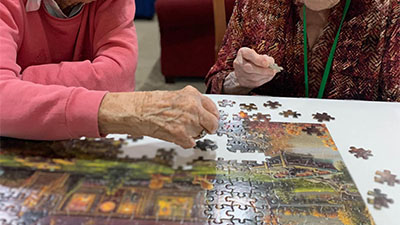
The right activities for memory care must not be made to fill up time for loading time. They should aid homeowners really feel connected, capable, and oriented. That might indicate songs, folding towels, horticulture, considering old photos, simple workout, spiritual solutions, sensory jobs, or brief strolls outside. The most effective programs recognize that success is not measured by the number of individuals are occupied at the same time. It is gauged by whether a resident leaves an activity calmer, a lot more engaged, or more like themselves.
Watch for the distinction between programs and true engagement. An area loaded with individuals enjoying something on a display is not the same as a small team vocal singing tracks from their younger years, or a personnel sitting close to a resident and helping sort familiar things. There is no single excellent activity routine, since great senior care ought to match the abilities and passions of the homeowners that live there. A previous gardener may illuminate at tomato plants. A retired teacher may enjoy reading out loud in a small team. Actual memory assistance searches for those sparks.
Communication with family members that really feels honest and ongoing
Families need greater than a regular monthly expense and a common upgrade. They need a partnership with the care group. That does not indicate continuous call for every small problem, but it does indicate timely, truthful interaction when something changes.
Ask just how the neighborhood connects concerning drops, hunger changes, rest interruption, medicine issues, or indications of boosting confusion. Ask that becomes your main get in touch with and just how easy it is to reach them. A receptive team can save a family members a lot of stress, specifically when the resident can no more totally clarify what took place throughout the day.
It additionally helps to ask how family members are included in care preparation. Some neighborhoods invite routine meetings and deal with household understanding as valuable. Others run even more like shut systems, where relatives are informed after decisions are currently made. The initial approach typically brings about better results because family members frequently notice patterns that staff may not catch as soon as possible. Maybe your loved one constantly becomes uncertain after a difficult visit. Maybe music from a particular age helps them eat lunch. These small observations can enter into the care strategy.
The appropriate degree of framework without stripping away choice
People living with dementia require framework, but not every hour needs to equal. Too much strength can increase stress, while way too much flexibility can produce confusion and stress. Great memory care finds the middle ground.
Look for communities that use foreseeable routines with small selections integrated in. A resident might select in between tea and coffee, or in between being in the common room and strolling in the yard. That sort of limited selection assists maintain agency without overwhelming somebody who is currently fighting with decision-making.


This is also where the approach of the area ends up being noticeable. Some locations think locals ought to just fit the timetable. Much better locations adjust the routine to the resident when they can. That versatility might appear small from the outdoors, but also for someone with memory loss, being offered one significant choice can reduce resistance and maintain dignity.
Specialized support for difficult moments
Dementia is not just regarding lapse of memory. It can consist of anxiety, worry, uncertainty, sleep disturbance, and modifications in mood or actions that can be hard for family members to witness. A solid memory assistance program should be ready for those minutes without turning to unnecessary restriction, shame, or overmedication.
Ask just how personnel deal with sundowning, roaming, resistance to individual care, or abrupt mood changes. There is no magic script, and every resident is different, yet you desire a team that sees habits as communication as opposed to defiance. If a resident refuses showering, the concern should not be, "Just how do we require conformity?" It should be, "What is making this feel harmful or unpleasant, and how can we work with it?"
This is one factor families often choose specialized memory care rather than more general senior care. The setting, staffing, and daily regimens are constructed around these facts. That matters when a person requires more than standard support with meals or housekeeping.
Respite choices and flexibility for family caregivers
Many families search for elder care just after caregiving has come to be tiring. That strain develops slowly, after that at one time. A partner may be up in the evening checking doors. An adult child may be managing job phone calls while coordinating medicines and consultations. Eventually, even one of the most devoted caregiver needs support.
Good areas recognize this. Some offer respite care, which can be a lifesaver when a family members requires short-term alleviation, healing time, or a bridge after a hospitalization. Respite care also gives family members a means to examine a community prior to making a much longer commitment. That experience can be even more revealing than a solitary tour.
Use those temporary stays very carefully. Watch how the neighborhood takes care of changes, due to the fact that moving into any brand-new environment is demanding for a person with memory problems. A place that handles respite thoughtfully frequently manages lasting care well, as well. If staff are warm throughout a brief keep yet disordered during the handoff, that informs you something important.
Transparency around expense, services, and what is in fact included
Money is often the hardest part of the discussion, and families deserve straightforward answers. Memory care can be pricey, and pricing frameworks differ commonly. Some neighborhoods bundle many solutions into one rate. Others charge independently for medicine help, individual care, special diets, or greater degrees of supervision. If you do not get quality early, shocks can stack up fast.
Ask for a created break down of what is consisted of, what prices additional, and how rates change as demands raise. A neighborhood that answers plainly is normally easier to deal with later. An area that is vague in advance may be difficult to select when your loved one requires even more support.
Cost should not be the only filter, however it ought to become part of the decision. The most inexpensive option is not always the most effective worth, specifically if it does not have appropriate staffing or requires frequent add-on charges. On the other hand, the most costly area is not immediately the most effective fit either. Households do best when they contrast what they are absolutely obtaining, not just the headline price.
Signs of an area that feels right when you stand there
A tour can inform you more than a brochure ever will. You are searching for ambience as long as amenities. Does the place really feel tranquil without feeling empty? Do citizens appear secure? Do staff seem to understand names and routines? Exists a rhythm to the day, or does everything feel improvised?
Sometimes families define a gut feeling after a visit, and that instinct deserves valuing. If the environment feels as well loud, too inflexible, or also polished to be credible, that issues. If the team take some time to respond to concerns without making you really feel rushed, that matters too. A well-run memory care community has a method of feeling steady. Not ideal, just steady.
It can help to visit more than as soon as, ideally at various times of day. Early morning and late afternoon can look very various. A place that really feels serene at 10 a.m. May be quite various after supper, when locals are worn out and staff are handling medicines and actions changes. When possible, make use of those visits to observe just how the neighborhood manages normal life, not simply the sales tour version of it.
Choosing with both your head and your heart
Families looking for memory care are normally lugging grief, regret, and necessity simultaneously. That psychological tons can make it tough to compare alternatives plainly. It aids to remember that picking assistance is not the like quiting. For lots of family members, it is the minute care ends up being extra lasting and much more humane.
The best senior take care of memory loss does not eliminate the illness. Nothing does. But it can reduce concern, shield routines, and give an individual extra great hours in the day. It can likewise provide relative space to go back to being little girls, boys, spouses, or grandchildren instead of full-time crisis managers.
When you compare communities, maintain your concentrate on the everyday lived experience. Can the staff explain how they know each resident? Does the setting reduced confusion rather than including in it? Are meals, activities, and communication thoughtful and responsive? Does the location offer respite care if you need a short-lived bridge? Can you visualize your loved one there on an ordinary Tuesday, not just during the refined tour?
Those are the inquiries that matter. Not since they are remarkable, however due to the fact that memory support is developed from ordinary minutes, duplicated well. A hand on the shoulder. A plate of food that is simple to recognize. A familiar track. A calm redirect. A caregiver that notifications the small change prior to it comes to be a big one. That is the actual work of memory care, and it is worth making the effort to discover it.
BeeHive Homes of Clovis provides assisted living care
BeeHive Homes of Clovis provides memory care services
BeeHive Homes of Clovis provides respite care services
BeeHive Homes of Clovis supports assistance with bathing and grooming
BeeHive Homes of Clovis offers private bedrooms with private bathrooms
BeeHive Homes of Clovis provides medication monitoring and documentation
BeeHive Homes of Clovis serves dietitian-approved meals
BeeHive Homes of Clovis provides housekeeping services
BeeHive Homes of Clovis provides laundry services
BeeHive Homes of Clovis offers community dining and social engagement activities
BeeHive Homes of Clovis features life enrichment activities
BeeHive Homes of Clovis supports personal care assistance during meals and daily routines
BeeHive Homes of Clovis promotes frequent physical and mental exercise opportunities
BeeHive Homes of Clovis provides a home-like residential environment
BeeHive Homes of Clovis creates customized care plans as residents’ needs change
BeeHive Homes of Clovis assesses individual resident care needs
BeeHive Homes of Clovis accepts private pay and long-term care insurance
BeeHive Homes of Clovis assists qualified veterans with Aid and Attendance benefits
BeeHive Homes of Clovis encourages meaningful resident-to-staff relationships
BeeHive Homes of Clovis delivers compassionate, attentive senior care focused on dignity and comfort
BeeHive Homes of Clovis has a phone number of (505) 591-7025
BeeHive Homes of Clovis has an address of 2305 N Norris St, Clovis, NM 88101
BeeHive Homes of Clovis has a website https://beehivehomes.com/locations/clovis/
BeeHive Homes of Clovis has Google Maps listing https://maps.app.goo.gl/SMhM3zbKaKgR1UAX6
BeeHive Homes of Clovis has TikTok page https://tiktok.com/@beehivehomes_clovis
BeeHive Homes of Clovis has Facebook page https://www.facebook.com/beehiveclovis
BeeHive Homes of Clovis has Instagram page https://www.instagram.com/beehivehomesclovis/
BeeHive Homes of Clovis has an YouTube page https://www.youtube.com/@WelcomeHomeBeeHiveHomes
BeeHive Homes of Clovis won Top Assisted Living Homes 2025
BeeHive Homes of Clovis earned Best Customer Senior Service Award 2024
BeeHive Homes of Clovis placed 1st for Senior Living Communities 2025
People Also Ask about BeeHive Homes of Clovis
What is BeeHive Homes of Clovis Living monthly room rate?
The rate depends on the level of care that is needed. We do a pre-admission evaluation for each resident to determine the level of care needed. The monthly rate is based on this evaluation. There are no hidden costs or fees
Can residents stay in BeeHive Homes until the end of their life?
Usually yes. There are exceptions, such as when there are safety issues with the resident, or they need 24 hour skilled nursing services
Do we have a nurse on staff?
No, but each BeeHive Home has a consulting Nurse available 24 – 7. if nursing services are needed, a doctor can order home health to come into the home
What are BeeHive Homes’ visiting hours?
Visiting hours are adjusted to accommodate the families and the resident’s needs… just not too early or too late
Do we have couple’s rooms available?
Yes, each home has rooms designed to accommodate couples. Please ask about the availability of these rooms
Where is BeeHive Homes of Clovis located?
BeeHive Homes of Clovis is conveniently located at 2305 N Norris St, Clovis, NM 88101. You can easily find directions on Google Maps or call at (505) 591-7025 Monday through Sunday 9:00am to 5:00pm
How can I contact BeeHive Homes of Clovis?
You can contact BeeHive Homes of Clovis by phone at: (505) 591-7025, visit their website at https://beehivehomes.com/locations/clovis/ or connect on social media via TikTok Facebook or YouTube
Ned Houk Memorial Park provides scenic desert landscapes and picnic areas suitable for assisted living and elderly care residents during relaxing respite care outings.